

Following Through on Listening to Sermons
Or, Best Practices for Preparing to Listen to Preaching

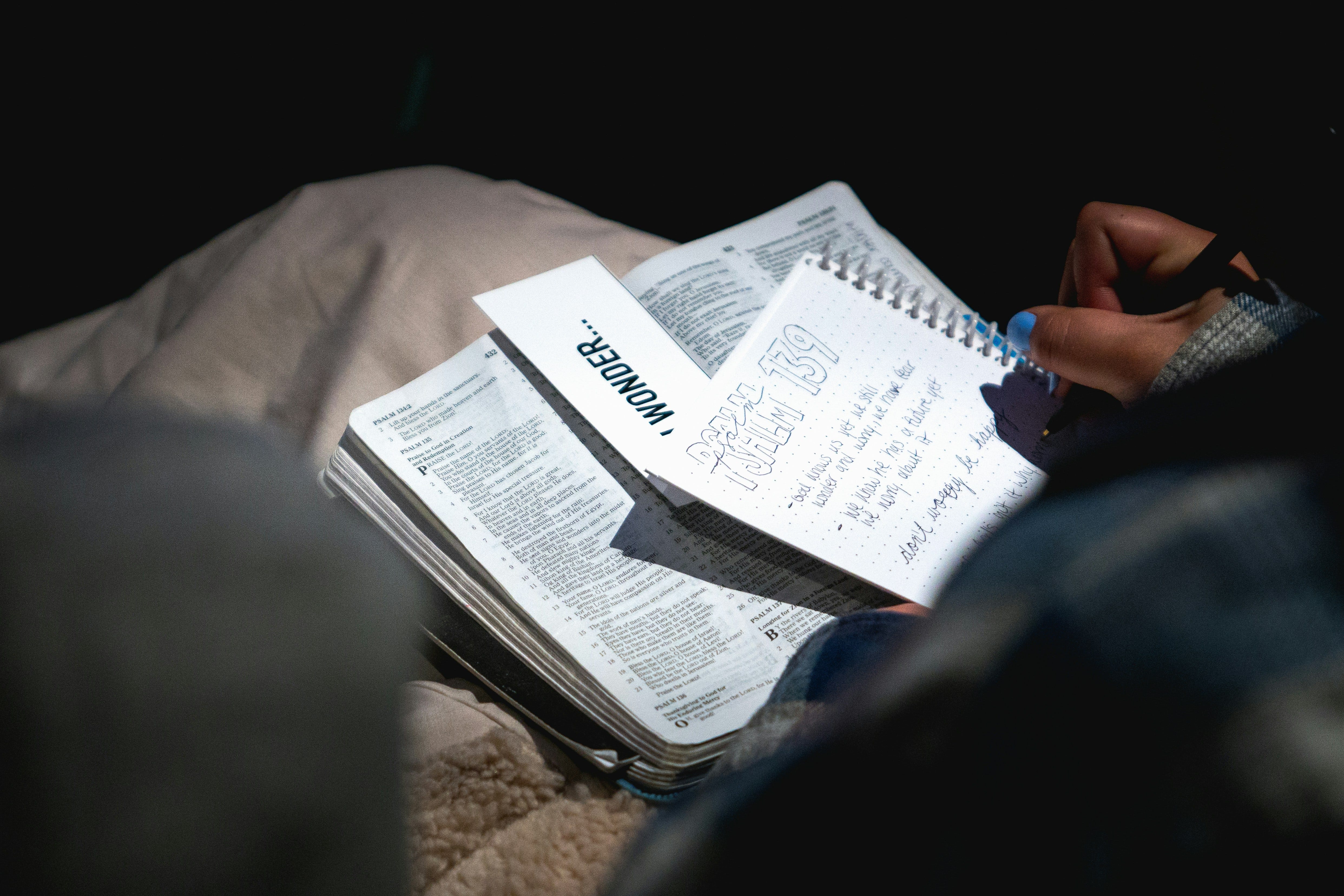
One of the things I appreciate about pastoring at Woodside is that I’m not expected to preach every Sunday. In fact, I’m expected not to preach every Sunday in a year. Our campus pastors are expected to fill their campus pulpits three out of four Sundays a month, or around forty Sundays in a year. That gives us space for renewal and rest, but it also gives you opportunities to hear from other godly men as they open the Word. Woodside isn’t a cult-of-personality church that only has one prominent “voice” that always speaks. It was refreshing for me to have a Sunday to sit under the teaching of Pastor Kiel as he worked through John 9.
As I was thinking about this week’s follow-through it occurred to me that this would be a good opportunity to recommend some best practices for listening to a sermon that can help enhance and strengthen your experience and foster greater and deeper transformation in your life. I want the preaching event to be a profound moment in our week when we meet with and hear from God. To get the most out of that encounter here are some tips I’ve gleaned to help you:
Prepare on Saturday
Back in the good old days of non-toxic Twitter, someone would post every week this reminder, “Sunday morning is a Saturday night decision.” I’ve found that statement to be true. You will enhance your experience of the sermon by giving some time on Saturday night to do three things: 1) Read the passage ahead of time so you’re familiar with it, 2) Pray for the Lord to prepare you to hear his word and respond in faith and obedience to him, 3) Pray for whoever is preaching the next day (odds are we might still be finishing up that sermon).
Bring and use a physical Bible
I looked around on Sunday morning and realized that a significant majority of us were looking at phones or tablet devices during the sermon. I’m not saying that is wrong, or sinful, but it did stand out to me. On that basis, (and I’m willing to sound speculative here, even though I have research on my side), I would suggest that you will gain more from the sermon if you have a physical copy of the Bible in hand rather than a digitial screen. Yes, digital apps are great and have some good tools for Bible study, but the distraction factor that goes along with those devices (even during a sermon) can be difficult to overcome.1
Take notes, not transcripts
I’m into analog formats for learning, discovery, and formation. Taking notes is wonderful and can be very helpful if you reflect on them during the week. But don’t feel like you have to be a stenographer and write down every word we say. Jot down what stands out to you, what you are hearing from the Lord, questions you might have, and insights that stick out. Jonathan Edwards wrote about what he desired to happen in his preaching:
I should think myself in the way of my duty to raise the affections of my hearers as high as possibly I can, provided that they are affected with nothing but truth.2
I share Edwards’ desire. Yes, I want you to understand the Bible better. But more than that, I want you to love and cherish Christ more each time we open the Bible. Note-taking will help remember what you heard, but it could also distract you from being moved by what is being preached. I’d rather have your heart impacted as you listen than your notebook filled. I want your love for Christ to grow warm, your mind renewed, and your soul to be refreshed.
Write down your “so what?”
There is one thing to write down after the sermon. You may need to reflect on the sermon a bit later to be able to do this, but that one thing is your “so what?” Another way to identify that “so what” is to ask a couple of questions, specifically, “What did God say to me? What am I going to do about it?” Every time we listen to God’s word as it’s preached we should ask these questions so we can be shaped and ruled by Christ’s word over us. James reminds us not to be hearers of the word, and not “doers” (James 1:22–25). Just listening to a sermon and walking away without reflecting and acting on it won’t lead to spiritual growth. God’s blessing is tied up with the person who is a “doer who acts, he will be blessed in his doing” (James 1:25).
I hope these tips are helpful. I’d love to know what some of your “best practices” for listening to a sermon are. How is the event of listening to sermons beneficial and transformative in your life? Share those things in the comments with me.
Last Sunday’s Message:
Here’s the audio and video recordings from Sunday.
You Asked… We’re Going To Answer
Kiel and I are due for another recording of The Follow-Through Podcast next Monday. So, we’re looking for your questions about the passages and stories from John 1-11 that we have been covering this month. Drop us a message or comment below with any questions you’d like us to tackle in our next episode.
One good question I received this weekend asked, “In John 9:39, Jesus says he came into the world for judgement. Yet, in John 3:17 Jesus says he came not to judge the world but to save it. How do we reconcile these two statements?” It’s a great question, but you’ll have to listen up to our next episode for the answer.
A Prayer For Listening to A Sermon
O Lord most high, O God eternal: May I hear your word with an honest and good heart, so I may understand it, and keep it, and bring forth fruit with patience, for your glory, and my everlasting comfort. Keep me from drowsiness and wandering thoughts. Sanctify my memory, that it may be apt to receive and firm to remember. And through the assistance of your Holy Spirit, may I put the same lessons I learn into practice for my direction in prosperity, for my consolation in misery, for the amendment of my life, and the glory of your name.
Lewis Bayly3
I’ll confess, I’ve scrolled Instagram during a sermon (not this Sunday) and wasn’t the better for it. Hence my appreciation for physical, analog technology.
Jonathan Edwards, The Great Awakening, ed. Harry S. Stout and C. C. Goen, Revised Edition, vol. 4, The Works of Jonathan Edwards (New Haven; London: Yale University Press, 2009), 387.
Tim Chester, Into His Presence: Praying with the Puritans, (The Good Book Company, 2022), 129.
Hey Jeremy. Sometimes I will prep before the sermon, if I know the sermon text beforehand I will do my reading and look at some person applications.